
A Practical Glen Ellyn Residents Directory Start
A useful search begins with a question, not a broad name query. A present owner question belongs in DuPage Property Lookup. A known address can be tested in the Election Division lookup. A transfer or lien belongs in the Recorder index, and a former household belongs in a directory, newspaper, or archive. These records do not create a complete household list. A parcel card names an owner, a voter result confirms a limited registration match, and a directory records a subscriber or listed adult for one year.
The Glen Ellyn residents directory works best as a chain of independent clues. Record the spelling, address form, date, PIN, document number, and source URL for each hit. Then seek a second source that measures a different fact.
- Search DuPage Property Lookup by address, PIN, or billing name.
- Check a known person or address in DuPage Election Search.
- Trace deeds through the Recorder by party, parcel, document, type, or date.
- Move older questions to library directories, newspapers, and historical collections.
- Use the Village FOIA route when an identified municipal file is not online.
Offices Behind the Glen Ellyn Residents Directory
Glen Ellyn is in DuPage County, but Wheaton is the county seat. Most county-level resident evidence is kept along County Farm Road. The Village Clerk at 535 Duane Street keeps Glen Ellyn ordinances, Board proceedings, contracts, maps, plats, permits, licenses, hearings, and other municipal files. Those materials may connect a person to a civic action or address, but they are not a resident roll. For a full address-keyed sequence, use the Glen Ellyn street directory.
DuPage County Recorder of Deeds
421 N County Farm Road
Wheaton, IL 60187
630-407-5400
DuPage Election Division
421 N County Farm Road, Room 1-600
Wheaton, IL 60187
630-407-5600
The official Village of Glen Ellyn home page is the safest starting point for current departments and notices.
The Village screen anchors the municipal side of the Glen Ellyn residents directory and helps avoid unofficial copies of forms.
Glen Ellyn Residents Directory Parcel Search
DuPage Property Lookup offers PIN, address, billing-name, map, and Board of Review hearing modes. A parcel card can show the owner or entity, situs address, mailing address, legal description, assessed values, exemptions, sales, and tax-year context. Those fields must be read with care. The situs identifies the land location. The mailing address is where notices go. Neither proves that every named owner occupies the Glen Ellyn property.
| Search mode | Best input | Useful result |
|---|---|---|
| Address | House number and street | Matching Glen Ellyn parcel |
| PIN | Ten-digit parcel number | Stable parcel card |
| Billing Name | Owner or billing party | Possible parcels tied to that name |
| Map | Mapped location | Spatial parcel context |
The DuPage Property Lookup shows the actual search entry point.
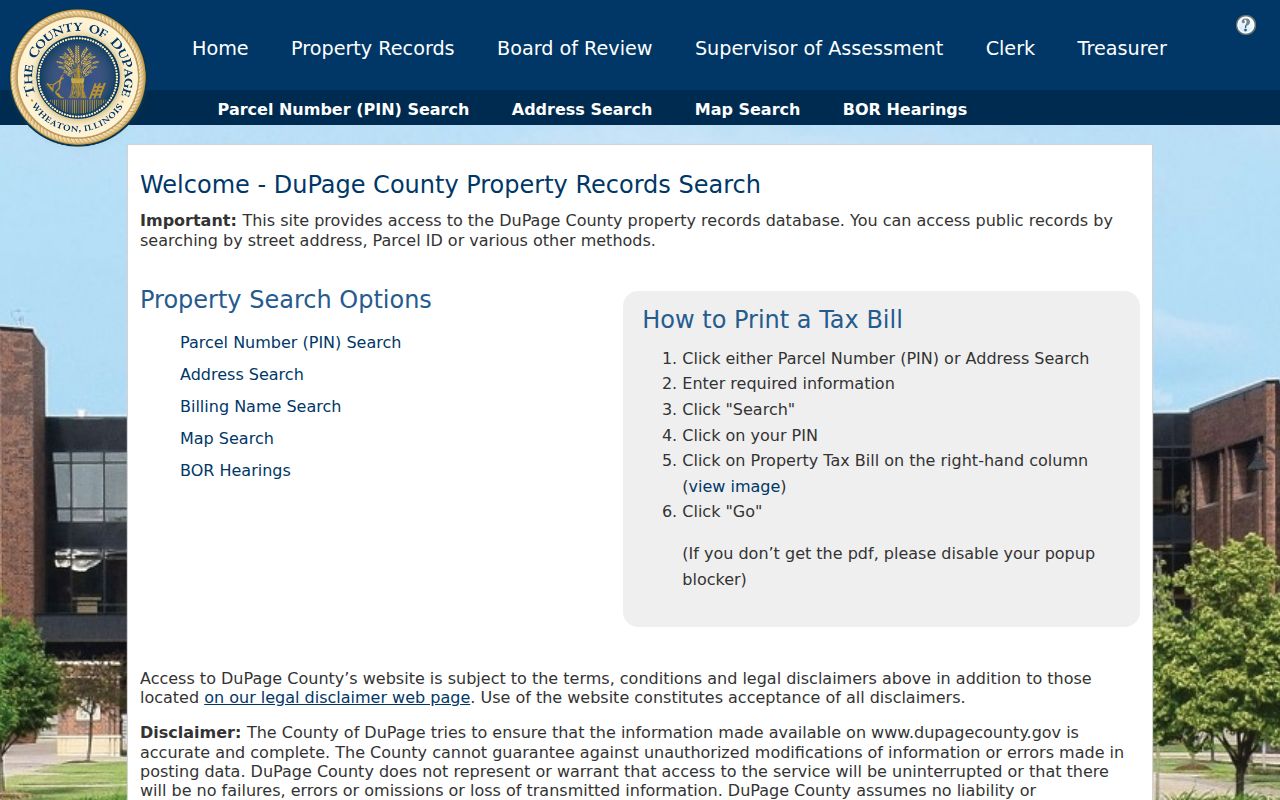
This portal is the strongest first stop when the Glen Ellyn residents directory question starts with a house or owner.
Deed Cutoffs in the Glen Ellyn Residents Directory
The Recorder's digital depth depends on the search key. Indexed names and document images begin March 16, 1961. Parcel-number searching begins in 1985, while property-address searching begins in 1995. Office research reaches back to 1839, and plats extend into the nineteenth century. This difference is an important insider rule: an empty address result does not show that no older deed exists. Switch to the PIN, legal description, grantor, or grantee, then call the Recorder Research line for the paper gap.
Index: a finding aid that points to a recorded item. Parcel: a legally described piece of land. Grantor and grantee: the parties conveying and receiving an interest.
The DuPage Recorder site opens the official index and explains office research.
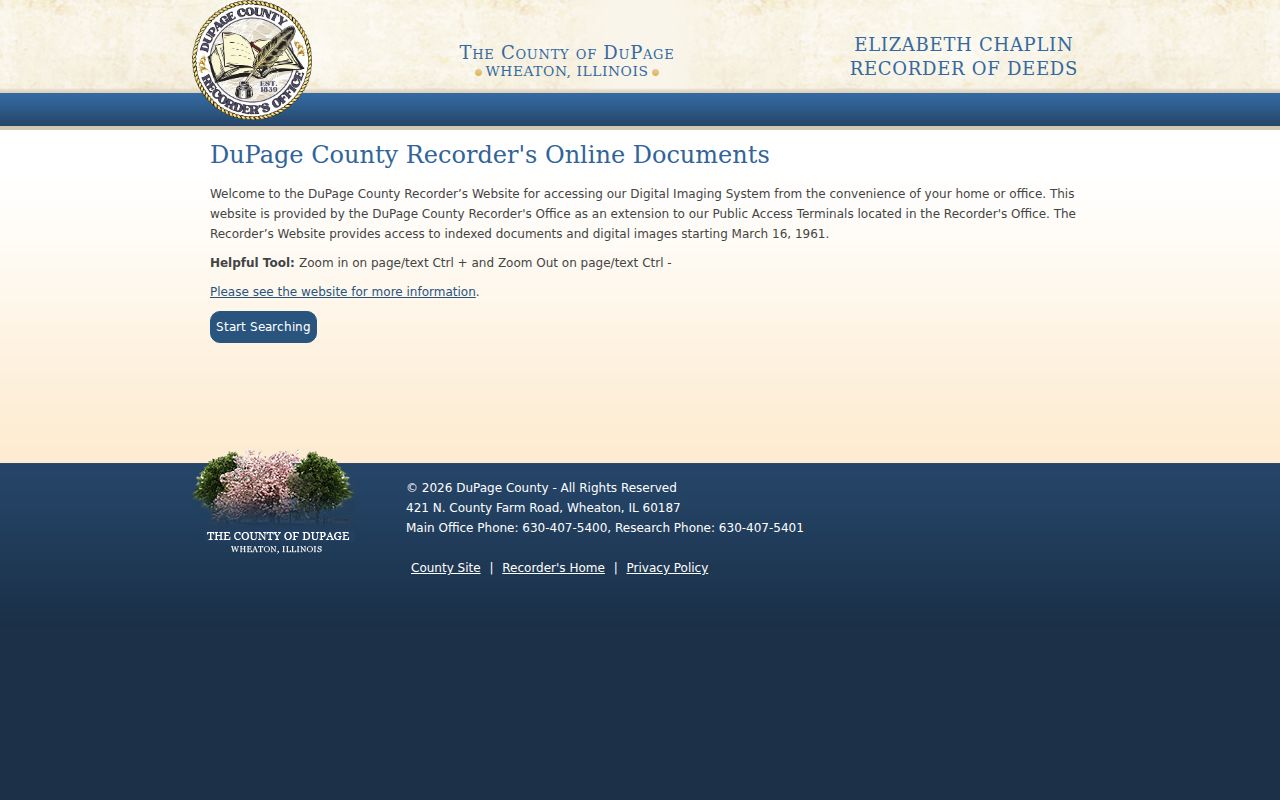
The image marks the correct custodian for document numbers, images, certified copies, plats, and older counter work.
What the Glen Ellyn Residents Directory Can Show
No official source lists every person at every Glen Ellyn home. A sound residents directory compares sources whose scopes do not overlap perfectly. The property roll focuses on owners and parcels. Election SearchMain provides a limited registration check through name, address, or district modes. Recorder documents identify parties to land records. Village files may name applicants, licensees, speakers, property contacts, or people involved in administrative actions. Each is evidence for its own purpose only.
| Official source | Person or link shown | Keeper | Access route |
|---|---|---|---|
| Property Lookup | Owner or entity and mailing contact | DuPage assessment system | Free web portal and office help |
| Election SearchMain | Limited registration match | DuPage Election Division | Name, address, or district search |
| Recorder index | Parties to recorded instruments | Recorder of Deeds | Online index, public terminal, research call |
| Village records | People tied to permits or civic actions | Village Clerk and departments | Portal, counter, or FOIA request |
Access also varies by channel. Property and election questions can begin online, while old deed work may require a public terminal or a call to Recorder Research. Village material can be inspected at the Civic Center or requested in writing. Library resources may require a Glen Ellyn card or an in-library visit. Keeping those channels in the research log prevents a failed web search from being mistaken for a missing record.
Glen Ellyn Residents Directory Voter Confirmation
DuPage Election SearchMain has name, address, and district tabs. Address mode separates house number, street name, direction, suffix, and city. The interface even warns that some names may require spacing changes, such as entering Mc Carthy for McCarthy. That small quirk matters when a plausible search returns nothing. The public screen is a confirmation tool, not a downloadable census of a block. Illinois Election Code limits broader voter-data access and protects sensitive fields and protected voters.
The official DuPage voter lookup should be used only for a lawful, known-person or known-address check.
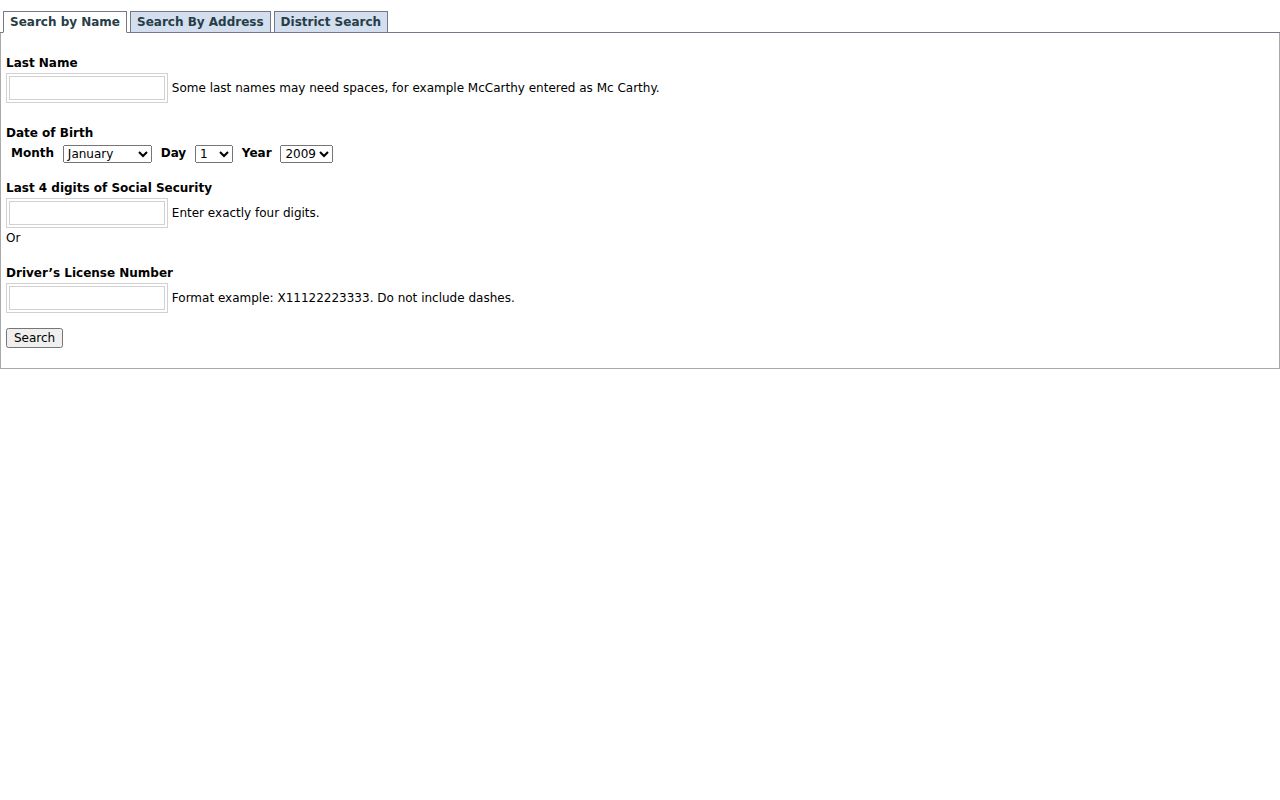
Its tabs show why the Glen Ellyn residents directory cannot be treated as a street-wide public voter roster.
Court Matches in the Glen Ellyn Residents Directory
The 18th Judicial Circuit and DuPage Circuit Clerk serve Glen Ellyn. A court search may show a case number, party role, filing activity, next date, or disposition, but a name alone can match the wrong person. Compare the result with another known attribute and inspect the docket rather than drawing a conclusion from a caption. Sealed, impounded, juvenile, adoption, and other protected material is not made public by a directory search. Copies and certification come from the Clerk, not from a screenshot.
The Clerk's court-records page explains public access and counter service at 505 N County Farm Road.
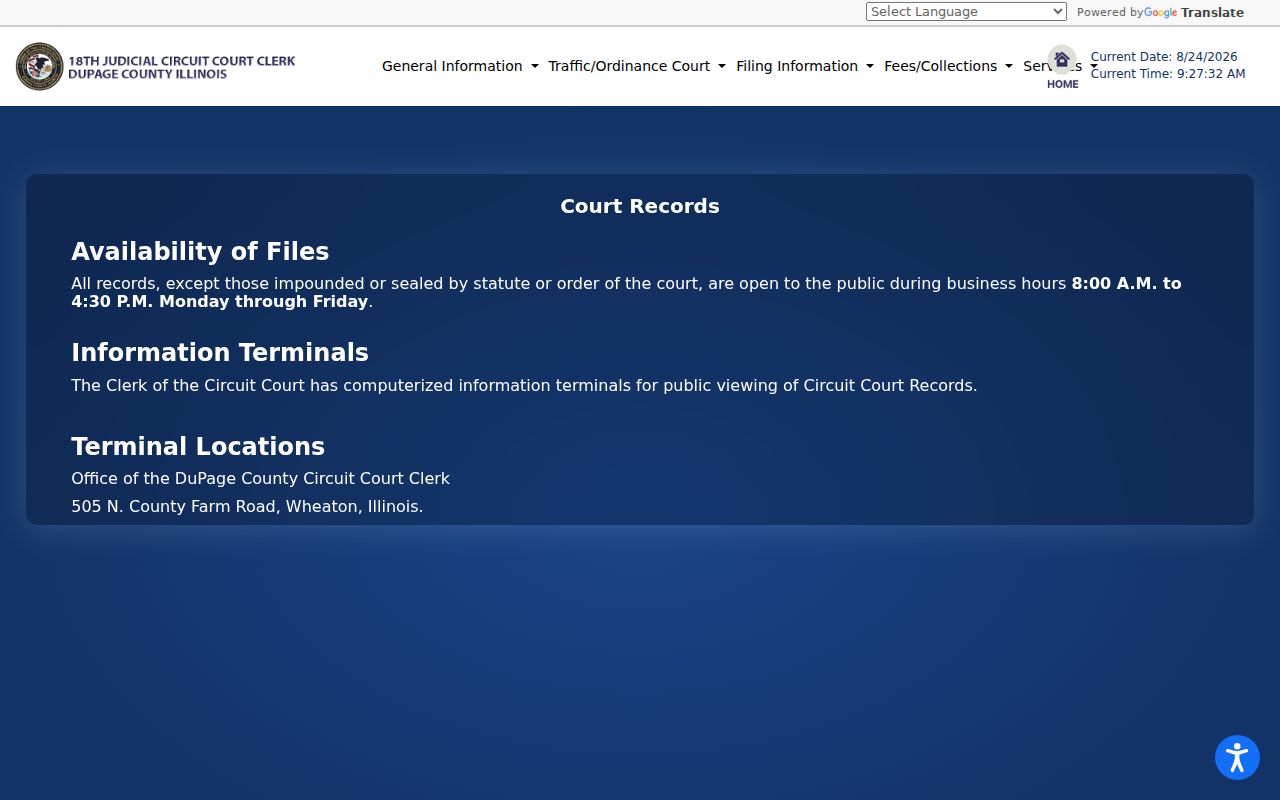
This source gives the residents directory a verification route without implying that every case file is open online.
Vital Records for the Glen Ellyn Residents Directory
Birth, death, marriage, and divorce records follow different paths. DuPage County Health Department maintains county birth and death records from 1953 and serves eligible requesters online, by mail, or in person. The County Clerk handles marriage and death certificates under its forms and eligibility rules. Divorce files belong to the Circuit Clerk. IDPH supplies statewide forms, verification services, and genealogy rules. Historical public indexes are not the same as certified copies.
Illinois law generally allows genealogical birth copies at 75 years and death copies when the death is more than 20 years old under the applicable custodian rules. Archives and IRAD use separate thresholds. The DuPage Vital Records page states the local route.
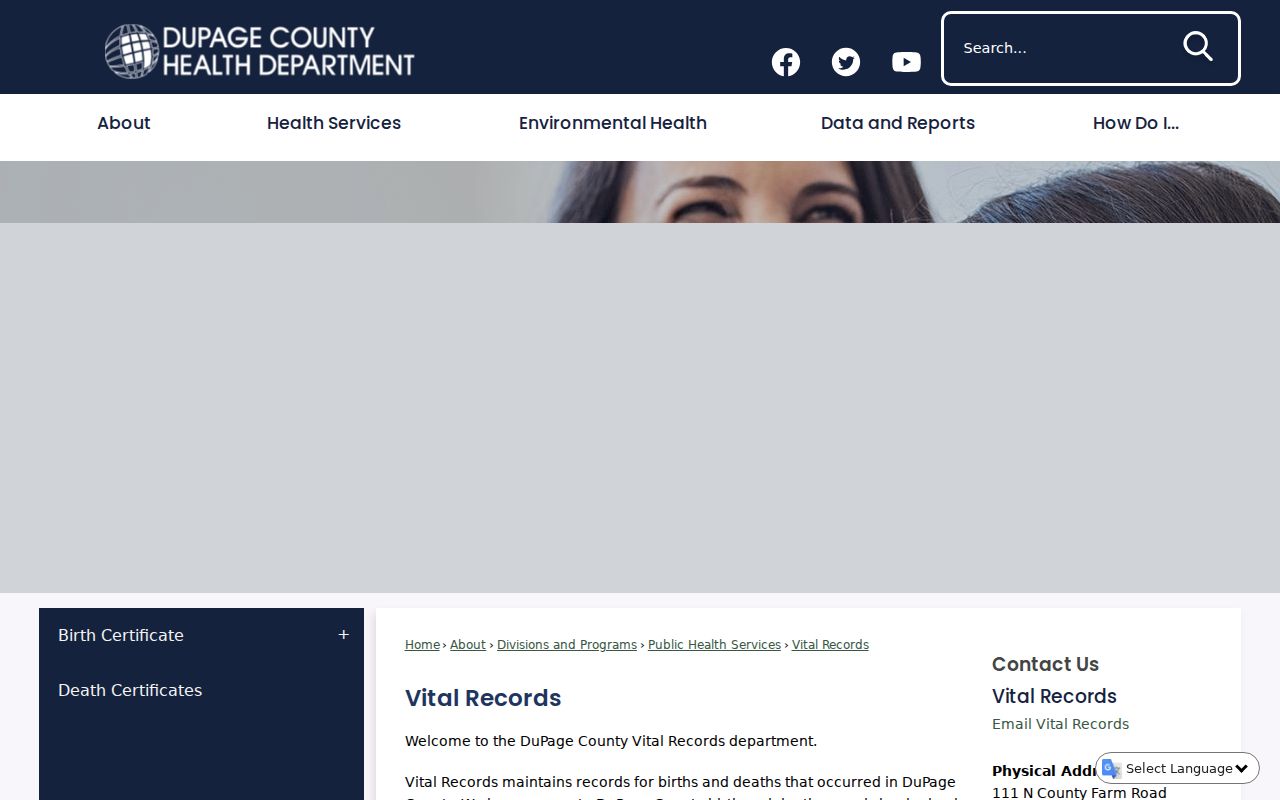
The page helps separate a restricted certificate request from a historical name-index search.
The Historical Glen Ellyn Residents Directory Trail
Older Glen Ellyn residents appear across several collections rather than one continuous shelf. The 1925–26 McDonough DuPage County Directory is digitized and divides material into city, rural, and buyers' guide sections. Glen Ellyn Historical Society holds phone books beginning in the 1920s, obituary files, maps, real-estate records, and house-history material by appointment. Wheaton Public Library lists Haines criss-cross directories covering 1988–2021 and a Near West Suburban run for 2004–2021.
Glen Ellyn Public Library adds local newspaper images and digital Glenbard yearbooks. Glenbard West runs from 1940–2025, and Glenbard South from 1973–2025. One directory year can place a listed person at an address, but a missing name can mean an unlisted household, a missing volume, a rural section, or a spelling variation. The full collections are organized on the Glen Ellyn city directory page.
Glen Ellyn Records Reach Through IRAD
Illinois Regional Archives Depository descriptions help when county and local records are not on a public portal. DuPage County dates to 1839, and the county seat moved from Naperville to Wheaton in 1867. That history is a search clue for early land, court, and county material. IRAD listings also identify unusually local Glen Ellyn sources: Local Improvements Board Minutes for 1910–1914 and a Special Assessment Record for 1930–1939.
Those series may connect a street, assessment, project, and Village action when a modern permit file cannot. Search the State Archives local-government database by DuPage County and Glen Ellyn title terms, then contact the Northern Illinois University IRAD repository for box or volume details. No verified courthouse-fire loss was found in the research, so gaps should be investigated through record series and custodians rather than explained with an unsupported story.
Glen Ellyn FOIA Fills Municipal Gaps
The Village Clerk maintains official Village records and accepts Illinois Freedom of Information Act requests. The Village says its form is convenient but not mandatory. A precise request should name the department, address, date range, record type, and whether inspection or copies are wanted. Submissions can go through the online form, email at FOIA@glenellyn.org, fax, mail, or the Civic Center counter. The first 50 black-and-white letter or legal pages are free; later pages may cost up to 14 cents each, and a CD is $5.
The Village FOIA page identifies the current request route.
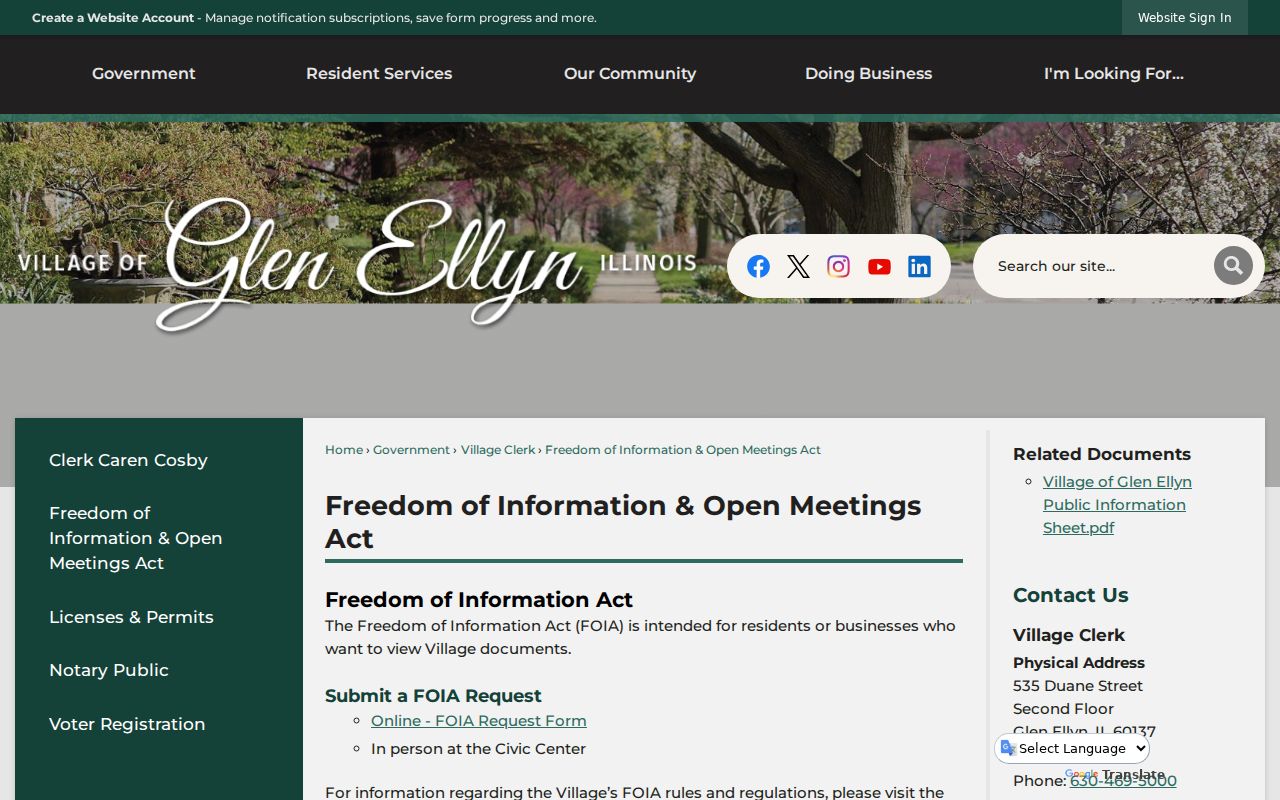
This fallback is most effective for a defined permit, map, license, hearing, or code file, not a request to compile all residents.
Current Glen Ellyn Safety Lookups Have Limits
Public-safety systems answer narrow status questions. The DuPage Sheriff links to a dynamic inmate search, while the Illinois Department of Corrections locator covers state custody and the federal Bureau of Prisons locator covers federal records from 1982 forward. Illinois State Police maintains the offender registry, and Illinois VINE provides custody notifications. A result should be matched by identifiers and checked at its official source because status and location can change.
The Illinois inmate search is one official statewide route.
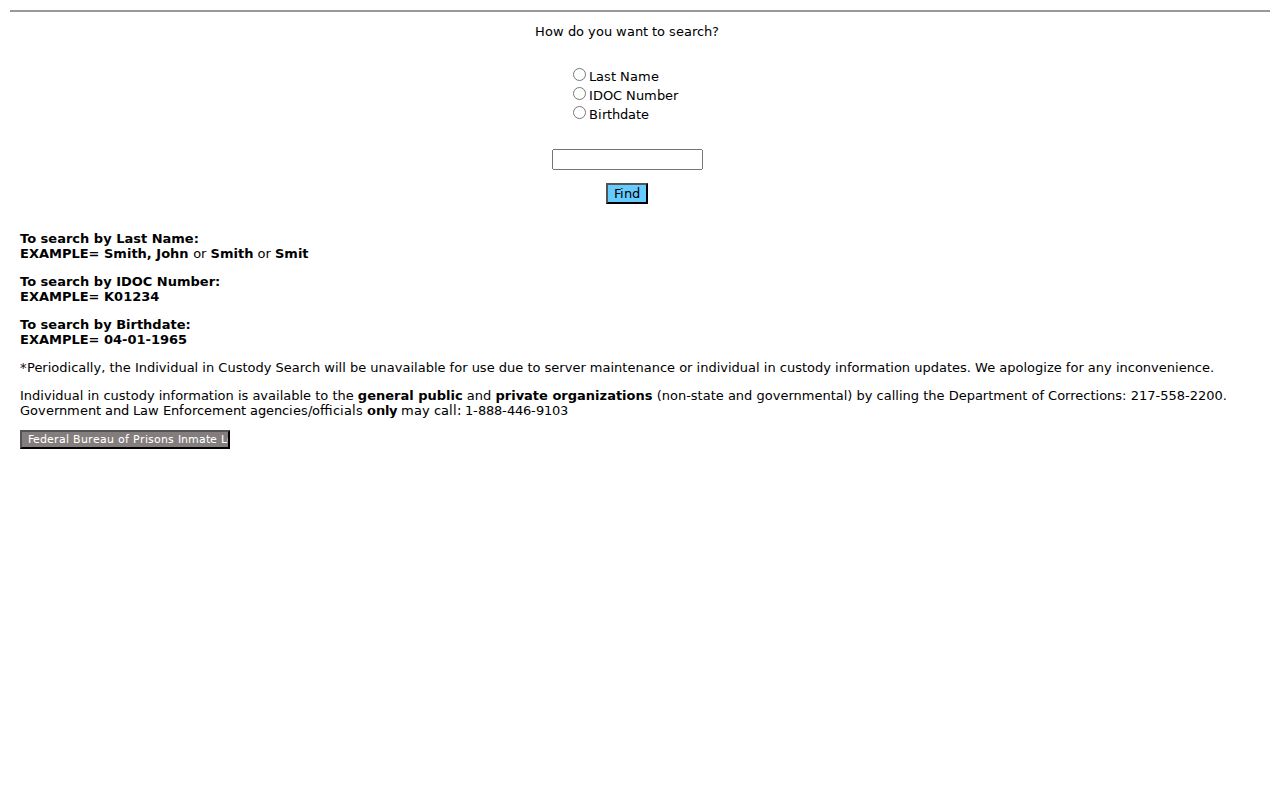
The portal is a defined custody lookup, not a general roll of Glen Ellyn residents.
Protecting an Address in Glen Ellyn Records
The Illinois Attorney General Address Confidentiality Program supplies a substitute address for qualifying survivors when they interact with state and local agencies. Enrollment is free, and a police report or protective order is not required under the program's published guidance. Special voter registration procedures can protect the residential address from ordinary public access. The program cannot remove information already in public records and does not currently guarantee privacy for property records.
The Attorney General's Address Confidentiality Program page explains eligibility and secure contact.
This protection explains why a responsible Glen Ellyn residents directory search must stop at sealed, redacted, or protected information.
Lawful personal use. Public access never permits stalking, harassment, threats, or attempts to defeat a protected address. Contact law enforcement when safety is at risk.